
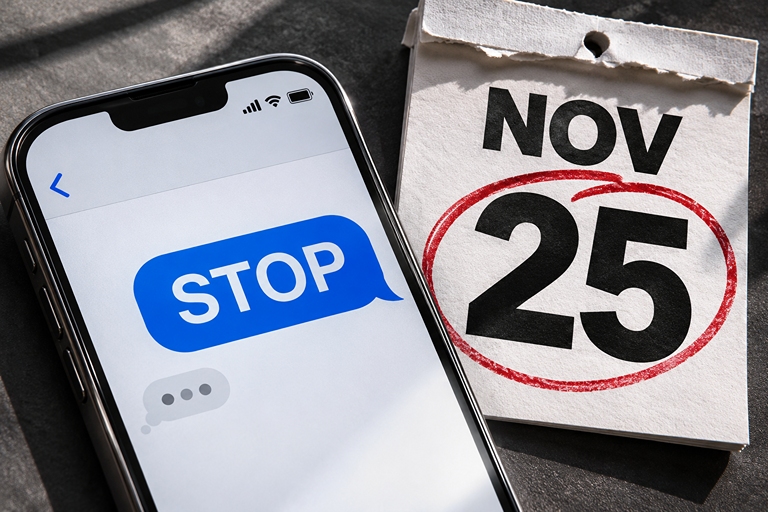
Texting Rules Change Nov. 25. Does Your 'STOP' Button Actually Work?
Quick question. If a customer texts your business "cancel," what happens?
A) The system stops texting them.
B) Someone on your team reads it Thursday.
C) Your appointment reminder cheerfully replies, "See you soon!"
If you answered B or C, this post is your friend. The federal rules for how people opt out of business texts and automated calls are changing on November 25, 2026, right in the middle of the holiday rush. Here's what's new, in plain English, and what to check this week.
What changed
On September 30, 2026, the Federal Communications Commission (FCC) adopted new rules about how consumers can revoke consent for automated calls and texts. According to a client advisory from The CommLaw Group published October 28, 2026, the rules were published in the Federal Register on October 26 and take effect November 25, 2026.
Here are the big changes, in normal-person language:
1. Opt-outs can be "category specific" for non-marketing messages
For informational messages, like appointment reminders or payment reminders, a business may treat an opt-out as applying only to that type of message. So someone could stop payment reminders but keep appointment reminders. Nixon Peabody's October 7 alert explains it this way.
2. Marketing is still all-or-nothing
If someone opts out of marketing texts, that covers all your future marketing texts and robocalls. No sneaky "but this is a different promo." It isn't.
3. Businesses can choose official opt-out methods
A business can name specific ways to opt out, such as replying with a standard keyword, pressing a key during an automated call, or using a set website or phone number. But that method has to be clearly disclosed in every message that needs consent. If you don't pick one, people can still opt out in "any reasonable" way, per Nixon Peabody.
4. Seven words still mean "stop"
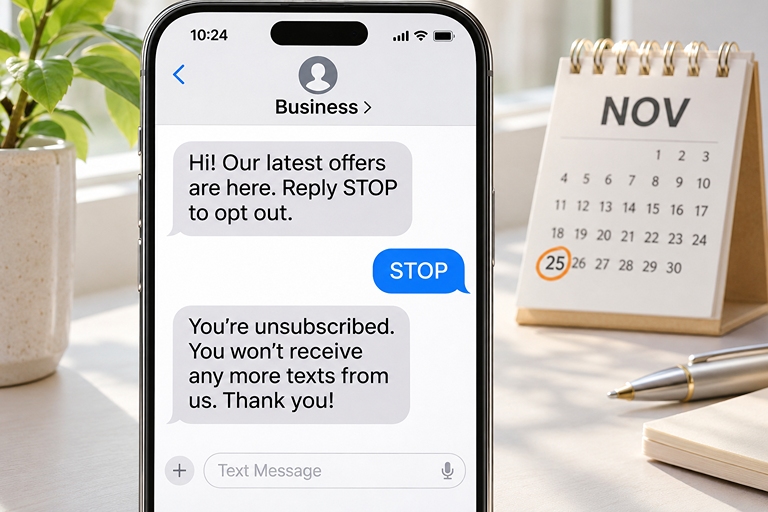
According to Covington's Inside Global Tech blog, senders must still honor these seven keywords: stop, quit, end, revoke, opt out, cancel and unsubscribe. Even if your message only says "Reply STOP to opt out," a customer who texts "quit" has quit.
5. The 10-business-day clock stays
Opt-out requests must be honored within a reasonable time, no more than 10 business days. The CommLaw Group notes the FCC is asking whether to shorten that to seven. Comments on those further proposals are due November 25.
One more important detail from The CommLaw Group: until November 25, keep following the current rules. Don't switch on the new options early.
Why it matters right now
The timing is cheeky. These rules land the day before Thanksgiving, when many businesses are sending more texts than at any other time of year: holiday promos, booking reminders, "we have openings!" blasts, and payment nudges.
And texts are personal. A promo that keeps coming after someone said "stop" doesn't just risk a complaint. It feels rude. That's a trust problem, not just a rules problem.
This is general information, not legal advice; check with your own legal or compliance advisor.
What it means for you
If you only send appointment reminders, your life just got a little easier: a customer can turn off one kind of reminder without losing all of them, if your setup can tell the difference.
If you send marketing texts, nothing gets looser. One opt-out from marketing still means no more marketing texts.
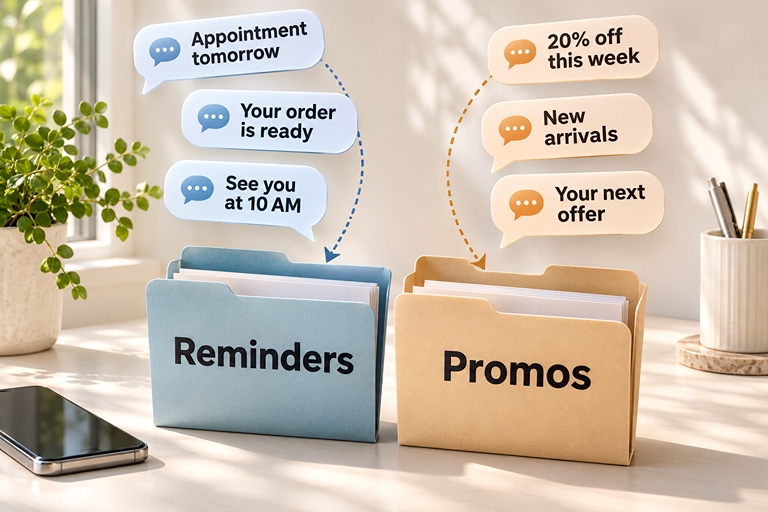
The real question is whether your system can tell the difference between "reminder" and "promo." If everything goes out from one big list, the answer is no. And mixing a sale into a reminder ("Your cleaning is Tuesday! Also, 20% off whitening!") turns that reminder into marketing.
Picture this: a med spa customer replies "stop" to a holiday promo. Two days later she gets a promo for gift cards. Then another. She leaves a one-star review titled "They don't listen." Ouch. That's the kind of story nobody wants, and a good setup prevents it.
What to do this week
Send yourself a test. Text each of the seven keywords to your business number from a spare phone. Does each one stop messages? Do you get a short confirmation?
List every type of text you send. Appointment reminders, payment reminders, review requests, promos, holiday hours. Label each one "informational" or "marketing."
Split your lists. Marketing messages should only go to people who said yes to marketing. Reminders should be their own thing.
Keep promos out of reminders. If a message is a reminder, keep it a reminder. Save the sale for a separate, opted-in message.
Check that every text says who you are and how to opt out. "Reply STOP to opt out" is short and clear.
Find the "human inbox" gaps. If someone replies "please take me off your list" in full sentences, who sees it? Make sure someone does, quickly.
Ask your vendor or advisor about November 25. If you want to use the new category-specific or exclusive opt-out options, confirm your setup and disclosures are ready first, and don't turn them on early.
Where Formosi fits
Here's what a system that handles this looks like. When Formosi sets up texting and follow-up automation for clients, opt-outs are handled automatically: when someone texts a stop keyword, they're flagged right away and future marketing texts are blocked. Reminders and marketing run as separate automations, so the right people get the right messages. Sender info and opt-out language are added to conversations, and can be re-added on a schedule so long-running text threads stay clear.
Formosi doesn't give legal advice. But we can build the setup your advisor signs off on, and make it easy to see who said yes, who said stop, and when.
Quick recap
New federal opt-out rules for texts and automated calls start November 25, 2026. Marketing opt-outs still cover everything. Non-marketing opt-outs can be narrower, if your system can tell the difference. And seven keywords still mean stop.
Your one step today: text "quit" to your own business number and see what happens.
If it's anything other than a polite goodbye, Formosi's team builds this for clients every week. Reach out and we'll help you get it right before the turkey hits the table.