
Online Reviews: Your New Business Card
Marketing, Online Reviews, Reputation Management
Your Online Reviews Are Your New Business Card — Here’s What To Do About It
Remember when you could hand someone a shiny business card, smile, and call it “marketing”? Adorable times. Today, your real business card lives on the internet, has a star rating, and occasionally types in all caps. Let’s talk about why your online reviews now introduce you to customers before you ever say hello — and what to do about it before a three-star rant becomes your brand identity.

1. How Consumer Behavior Has Shifted (And Why Reviews Go First)
Let’s start with the awkward truth: people trust strangers on the internet more than they trust your marketing. A well-written ad? Cute. A five-paragraph review from “CoffeeLover92”? Deeply compelling. That’s the new reality of small business reputation today.
Before someone buys, books, or walks through your door, they do two things: they search your name, and they skim your online reviews. They’re not just checking if you exist. They’re checking:
- Do other humans like me trust this place?
- What actually happens after I hand over my money?
- What goes wrong here — and how do they handle it when it does?
This isn’t just about Google reviews, though those are usually the first thing that pops up. Anywhere customers can leave stars and stories becomes part of your public record. Your review strategy is now as important as your logo, your website, and whether your staff remembers to smile like they mean it.
The shift is simple: people used to ask a friend; now they ask a search bar. Reviews are word-of-mouth on loudspeaker, recorded forever, sortable by “most recent.” If you ignore them, you’re basically leaving your brand story in the hands of whoever had the strongest feelings on a random Tuesday.
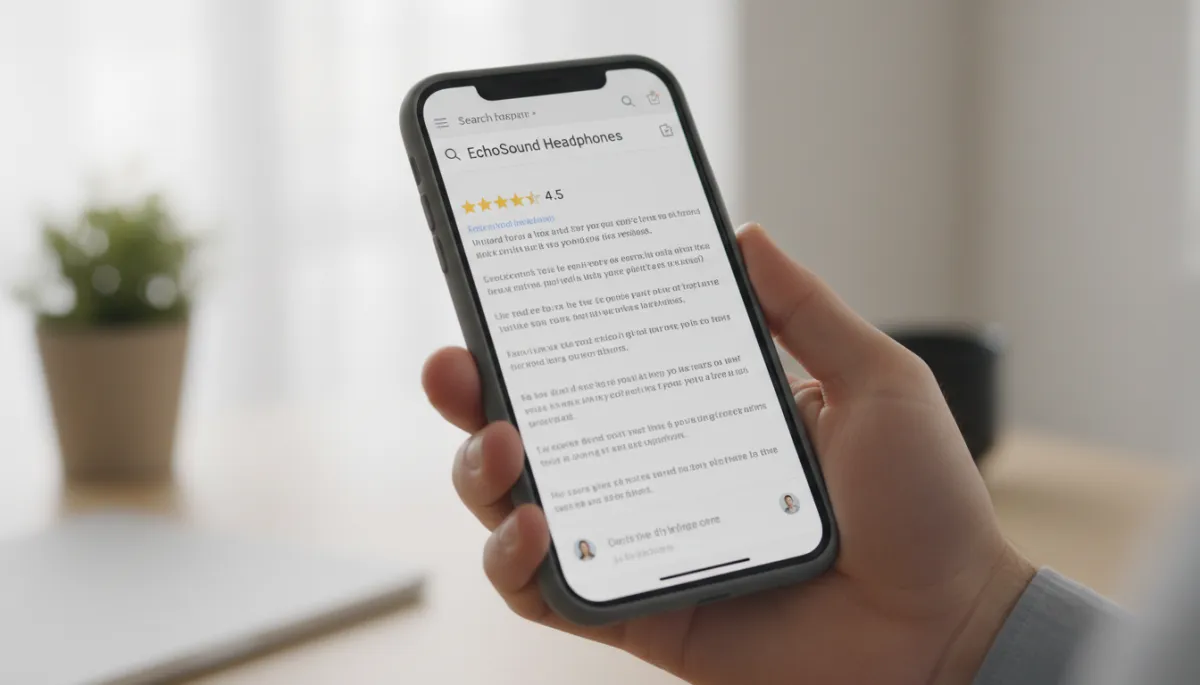
Most buying journeys now start with a search bar and a star rating check.
2. What Your Current Review Profile Is Secretly Saying About You
You might think, “Nobody actually reads those.” They do. And even when they don’t read every word, they scan and judge at lightning speed. Your review profile is sending signals, whether you meant it to or not. A few common messages:
The “No Reviews” Profile
If you have almost no online reviews, people don’t think, “Oh, they’re new.” They think, “No one I know has trusted them yet,” or worse, “Are they even real?” Silence online feels risky. Customers would rather choose a business with a few imperfect reviews than one with no proof of life at all.
The “All 5-Stars, No Details” Profile
Ten reviews, all five stars, all saying “Great!” and nothing else? That can look… curated. People don’t just want stars; they want stories. If everything looks too perfect, the modern brain whispers, “Is this real, or did someone’s cousin get very busy last weekend?”
The “We Never Respond” Profile
If customers leave feedback and you never reply, the message is, “We’re not really listening.” Your reputation management isn’t just about the score; it’s about the conversation. A lack of responses suggests a lack of care, even if you’re actually just busy running the place and occasionally sleeping.
The “Defensive Owner” Profile
You know the one: every negative review has a long, emotional reply from the owner, often ending with something like, “You never even came in.” That tells potential customers two things: issues do happen, and if they do, they may be signing up for a public argument. Not ideal for trust-building.
3. How to Ethically and Consistently Ask for Reviews
Hoping for reviews is not a review strategy. That’s like hoping for six-pack abs while actively avoiding stairs. If you want strong small business reputation online, you need a simple, repeatable system to ask for reviews — without being weird, pushy, or bribey. (Yes, that’s a word now.)
Ask at the Right Moment
The best time to ask is right after a positive interaction, when the customer is still thinking, “Wow, that was great.” Examples:
- After they thank you in person or over the phone
- After a successful appointment, delivery, or project completion
- After they reorder or renew — clear sign they’re happy
Make It Ridiculously Easy
People are busy. If leaving a review takes more than a few taps, they’ll mentally file it under “someday” (also known as “never”). Make the process simple:
- Send a follow-up text or email with a direct link to your preferred review page
- Add a short, clear line: “It would mean a lot if you’d share your experience in a quick review.”
- Use simple instructions: “Click the link, choose the number of stars, write a sentence or two.”
Stay Ethical (No Bribes, No Scripts, No Weirdness)
Offering discounts or gifts in exchange for “good” reviews is not only sketchy; it can violate platform policies and backfire badly. Instead:
- Ask for “honest feedback” — not “five stars only, please and thank you.”
- Don’t write reviews for customers or hand them scripts. Authenticity sells better than perfection.
- Train your team to ask confidently, not apologetically. You’re not begging; you’re inviting them to help other customers find a good experience.

A simple, clear invitation at the right moment can multiply your reviews.
4. How to Respond to Negative Reviews Without Making Things Worse
Negative reviews feel personal, especially when you’ve poured your life, savings, and at least one nervous breakdown into your business. But here’s the twist: a negative review, handled well, can actually strengthen your small business reputation. The key is responding like a calm professional, not a cornered raccoon.
Step 1: Breathe, Don’t Blast
First rule of responding to reviews: never reply while angry. Read it, walk away, complain to a wall, then come back when your blood pressure returns to human levels. Your response is not for the reviewer; it’s for every future customer reading that thread, deciding if you’re safe to work with.
Step 2: Acknowledge and Empathize (Even If They’re Wrong)
You can disagree with their version of events and still acknowledge their experience. A simple structure:
- Thank them for the feedback (“Thanks for taking the time to share this.”)
- Show empathy (“We’re sorry your experience didn’t match what we aim for.”)
- Move the detailed conversation offline (“We’d love to learn more and make this right — please contact us at…”)
Step 3: Don’t Argue in Public
The moment you start debating facts in a public reply, you’ve already lost. Future customers don’t care who’s technically correct; they care whether you handle problems with grace. Keep it short, respectful, and solution-focused. Save the detailed back-and-forth for email or phone, where nuance still exists.
Step 4: Show You Actually Improve Things
When appropriate, mention what you’re changing as a result. For example: “We’re updating our training so this doesn’t happen again.” That turns a one-time complaint into a public example of your commitment to improvement — a powerful move in reputation management.

A calm, professional reply can turn a bad review into a trust-building moment.
5. How to Use Positive Reviews Strategically in Your Marketing
Positive reviews are not just digital gold stars; they are marketing assets. Most businesses work hard to earn them and then let them sit quietly on a review page like forgotten trophies on a dusty shelf. Let’s fix that. If customers are kind enough to write about you, put those words to work.
Turn Reviews into Social Proof Everywhere
Take your best, most specific online reviews and sprinkle them through your marketing like seasoning:
- Add review quotes to your website homepage and service pages (“I couldn’t believe how easy they made it…”)
- Use screenshots of real reviews in social media posts (with names blurred if needed)
- Include short review snippets in email signatures or follow-up emails
Highlight Reviews That Answer Objections
Your best reviews don’t just say “great service”; they say “I was worried about X, but they did Y.” Those are gold. They speak directly to the fears of new customers:
- “I thought it would be expensive, but the price was fair.”
- “I was nervous about trying a new place, but they made me feel comfortable.”
- “They fixed the problem quickly when something went wrong.”
These reviews double as mini case studies. They quietly handle objections before your sales pitch ever begins.
Keep Your Review Stream Fresh and Visible
People don’t just look at your average rating; they check how recent the love (or chaos) is. A steady flow of new reviews says, “We’re active, consistent, and still making people happy.” That’s powerful for reputation management and responding to reviews in real time.

A steady stream of fresh reviews signals consistency and builds long-term trust.
Putting It All Together: Build a Review System, Not a One-Time Fix
Your reviews are not a side quest; they’re part of the main storyline of your business. Treat them like it. A simple, practical system might look like this:
- Audit your current review profile. Search your business name, read everything, and see what story it tells right now.
- Set a simple review goal. For example: “We’ll ask five happy customers per week for a review.”
- Train your team. Give them a short script they can say naturally and a clear way to send links or QR codes.
- Respond to every review. Yes, all of them. Quick thanks for positive ones, calm professionalism for negative ones.
- Reuse your best reviews. Turn them into website quotes, social posts, and proof in your sales conversations.

Treat reviews like a system, not a surprise, and your reputation compounds.
Final Thought: Your Reviews Are Talking. Make Sure They’re On Your Side.
Your next customer will probably meet you through a screen, not a handshake. They’ll see your name, your star rating, and a handful of comments from people who came before them. That’s your new business card. Not glossy paper. Not a clever slogan. Real experiences, written by real people, sitting in plain sight.
If your reviews are strong, consistent, and well-managed, you start every new relationship ahead of the game. If they’re messy, outdated, or ignored, you’re asking customers to take a risk — and most won’t. In a world where everyone checks reviews before they buy, online reviews and smart reputation management aren’t optional. They’re part of how you do business.
Ready to Turn Reviews Into a Growth Engine?
If you’re thinking, “This all makes sense, but I barely have time to eat lunch, let alone track reviews,” you’re not alone. That’s exactly why Formosi Insight exists — to help small business owners see, understand, and improve what their reviews are saying, without living inside a dashboard all day.
Formosi Insight gives you a clear view of your online reviews, helps you spot patterns, and supports a smarter review strategy so your hard work shows up where customers are actually looking. When your reputation starts working as hard as you do, everything else — marketing, sales, word-of-mouth — gets easier.
Your reviews are already talking. If you’re ready to make sure they’re saying the right things — consistently, confidently, and at scale — it’s time to put Formosi Insight to work for your business.