
Improve Your Business with Better Invoicing
Small Business, invoicing for small business, POS system, payment processing, billing strategy
The Invoice Is a Mirror: What Your Billing Process Says About Your Entire Business
If you really want to know how healthy a business is, don’t start with the logo, the website, or the Instagram feed. Start with the invoice. That simple little document is a brutally honest mirror. It shows how you value your time, how much you trust your clients, and whether your cash flow is running or limping. And for a lot of small business owners across the US, that mirror is… not flattering.
Why Most Small Business Invoices Look Unprofessional (and Get Paid Slowly)
Let’s be blunt: most small business invoices look like they were assembled at 1:37 a.m. using a free template and pure panic. Random fonts, fuzzy logos, no clear due date, vague line items like “Services rendered” (what does that even mean?), and payment instructions that read like a scavenger hunt. Then we’re surprised when clients take their sweet time paying them.
An invoice is not just a receipt. It’s a signal. A clean, clear invoice says, “This is a real business. We know what we’re doing. Please treat us accordingly.” A sloppy one says, “We’re making this up as we go. Deadlines are more of a suggestion.” Guess which one gets paid faster. When people see chaos on paper, they assume there’s more chaos behind the scenes. And chaos does not inspire urgency in payment processing on their end.
Professional invoicing for small business isn’t about being fancy; it’s about being frictionless. Clear logo and contact info. A simple description of what was done, when, and for how much. A bold due date. Obvious payment options. No detective work required. The less your client has to think, scroll, or email you for clarification, the faster that invoice moves from “I’ll get to it later” to “Paid.”
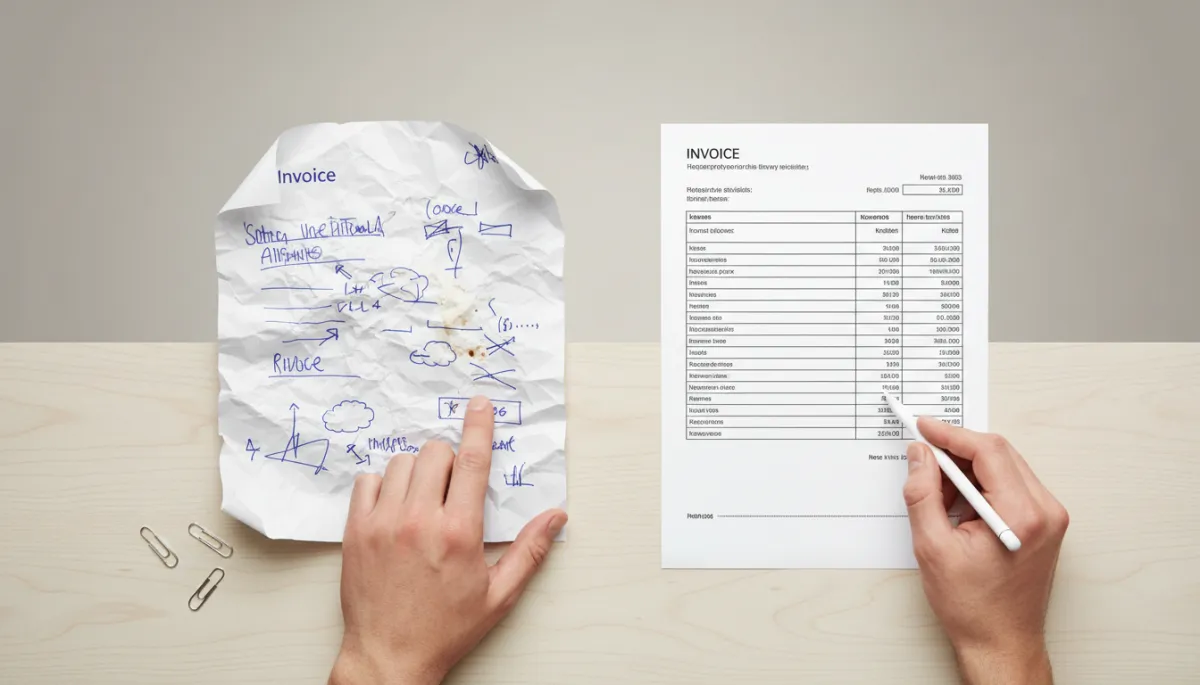
Clear, well-structured invoices get approved and paid days faster than messy ones.
The Psychology of Payment Terms: Net 15, Net 30, and Due on Receipt
Payment terms look harmless. A tiny line: “Net 30.” “Due on receipt.” “Net 15.” But those three words can decide whether you’re chasing money for weeks or actually sleeping at night. This is where billing strategy stops being paperwork and starts being psychology.
Net 30 is the default for many businesses because “that’s what everyone does.” Translation: “I’m giving you a month-long, interest-free loan and hoping you remember me.” Most clients don’t pay on day 3 of a Net 30 term. They pay closer to day 30. Or day 37. Or when you nudge them. Long terms create the illusion that there’s no rush, and human brains love ignoring non-urgent problems, especially if it involves money leaving their account.
Net 15 tightens that window. Suddenly the invoice lives in the “This month” mental folder instead of “Whenever.” For a lot of small businesses, net 15 is a sweet spot: it feels reasonable to clients but still keeps your cash flow from turning into a sad roller coaster. If you’re constantly thinking, “Why is it so hard to get paid faster?” your terms may be part of the answer, not the economy, the moon phase, or your horoscope.
Due on receipt sounds intense, like you’re standing behind the client’s chair with a card reader the moment the invoice hits their inbox. But in practice, it just means, “This is payable now, not next month.” It works best when paired with easy, immediate payment options—click, pay, done. If you send a “due on receipt” invoice and then make them mail a check to a PO box, you’ve just written a joke with no punchline. The term says urgency; the process screams delay.
💡 Blunt Truth: Your payment terms train your clients. If you act like waiting 30–45 days is normal, they’ll believe you. If you set clear, shorter terms and make paying painless, most reasonable clients will adapt.
Automated Payment Reminders: Less Awkward, More Effective
Few things feel more uncomfortable than emailing a client: “Hey, just circling back on that invoice…” You’re trying to sound casual while screaming internally, “Please pay me so I can pay everyone else.” The good news is you don’t have to keep starring in that emotional drama. This is where automated invoicing and reminders quietly save your sanity and your relationships.
Automated payment reminders turn the follow-up from personal to procedural. Instead of you nagging, the system gently taps them on the shoulder: “Reminder: Invoice #104 is due in three days.” “Invoice #104 is now past due.” No guilt, no awkwardness, no 17 drafts of the perfect “friendly reminder” email. You’re not the bad guy; the process is just doing its job. Most people don’t ignore invoices because they hate you. They forget. Their inbox is a war zone. A structured reminder sequence simply respects reality—and your cash flow.

Automated reminders recover late payments without turning you into the full-time bill collector.
When done right, automated invoicing actually protects your client relationships. You can keep your human conversations focused on results, ideas, and next steps—not, “So, about that invoice…” Clients respect businesses that set clear expectations and follow through consistently. It shows you take your work seriously enough to have a system, not a series of panicked follow-ups at random intervals.
Your POS System: Just Taking Payments, or Building a Business?
Let’s talk about your point of sale setup. Many small businesses treat their POS system like a glorified calculator: customer shows up, you ring up the sale, card goes in, receipt prints, everyone leaves. Money in, product out, end of story. Simple, yes. Strategic? Not really. You’re doing payment processing when you could be building a repeat-customer machine.
A basic point of sale just takes payments. A smarter one captures customer data—names, emails, purchase history, preferences—and turns every transaction into a future opportunity. Who bought from you three times in the last two months? Who hasn’t come back in six? Who always buys the premium option? That’s not trivia; that’s your marketing plan hiding in plain sight. When your POS system and invoicing talk to each other, you stop guessing and start targeting.

A data-aware POS turns each sale into insight you can actually use tomorrow.
When you combine invoicing for small business with a POS system that remembers your customers, you can send targeted offers, loyalty rewards, and reminders that feel personal instead of spammy. “Hey, you’re due for a tune-up.” “We’ve got a refill discount this month.” This is how you move from one-off sales to predictable repeat business—without begging the algorithm gods on social media every week.
Recurring Billing and Payment Links: Cash Flow’s Best Friends
If your revenue depends on services you deliver every month—membership, cleaning, consulting, maintenance—then sending a fresh invoice manually each time is like choosing to do pushups with a backpack full of bricks. You can, technically. But why? Recurring billing exists so your income doesn’t reset to zero emotionally every 30 days while you chase people down with new invoices and hopeful emojis.
With recurring billing, you set the amount, the schedule, and the payment method once. After that, payments hit automatically unless someone cancels. No “Did you get the invoice?” No “I’ll send it later today” that turns into next week. Your cash flow becomes more predictable, and your mental health stops being tied to whether 12 different people managed to open a PDF on time this month. It’s automated invoicing with a backbone—and a calendar.

Recurring billing and payment links turn unpredictable income into a steadier monthly rhythm.
Payment links are the lightweight cousin of full invoices. Instead of generating a detailed document for a simple, one-off payment, you send a secure link: click, enter details, done. They shine for deposits, quick add-on services, or anything that doesn’t need a 12-line breakdown. The less friction between “Yes, I’ll pay” and “Payment completed,” the more likely that money actually arrives while the motivation is still warm.
Why Multiple Payment Methods Increase Your Average Transaction Value
People are weirdly loyal—to their preferred way of paying. Some swear by cards. Some live on digital wallets. Some still love checks, bless their patient hearts. When your business only accepts one or two methods, you’re basically saying, “We only want the customers who happen to pay the way we like.” That’s not a strategy; that’s self-sabotage in a nice shirt.
Offering multiple payment methods—card, bank transfer, digital wallet, even payment plans where appropriate—doesn’t just help you get paid faster. It tends to increase average transaction value. When people can use the method that feels easiest or most rewarding to them, they’re more open to upgrading, adding extras, or saying yes to the slightly better option. It feels less like a sacrifice and more like a smooth, controlled decision. Your job is to remove every excuse that starts with, “I’ll buy it later when I’m at my computer with my card…”
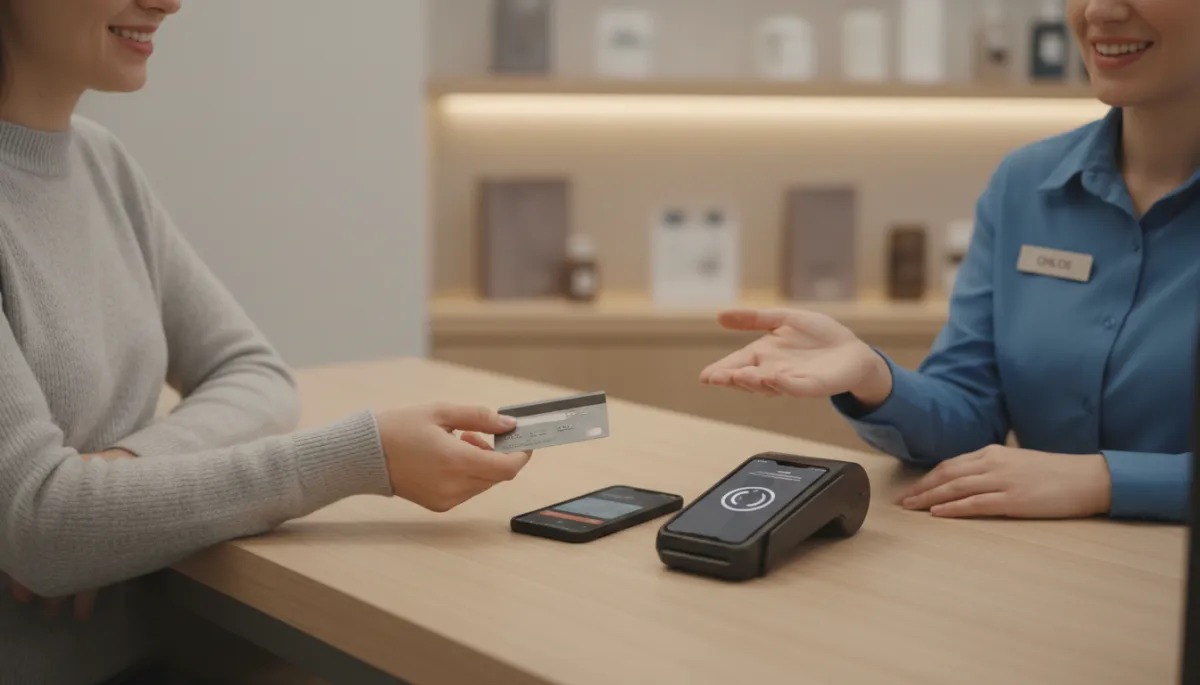
More payment options mean fewer abandoned sales and more confident upgrades at checkout.
Your invoicing for small business and your POS system should both reflect this flexibility. If a client wants to pay an invoice by card instead of check, make it happen in two clicks. If a customer at your point of sale wants to split payment between card and wallet, don’t stare at them like they just asked you to accept seashells. The easier it is to say “yes” in the moment, the bigger that “yes” usually becomes.
The Philosophy Behind the Money: Respect, Trust, and Sloppy Billing
Let’s zoom out for a second. Underneath all the payment processing, recurring billing, and point of sale talk, there’s a simple idea: the way your business asks to be paid is a direct reflection of how much it respects its own work—and how much it trusts its clients. That’s the mirror. That’s what your invoice is quietly shouting, whether you like it or not.
When you send clear, timely invoices with fair terms and easy payment options, you’re saying, “What we did for you matters. It has a real value. We trust you to honor that value, and we’ve made it simple to do so.” That’s confident. That’s professional. It treats the relationship like a partnership, not a favor. Clients feel that. They may not write poetry about your billing strategy, but they notice when things are smooth, respectful, and predictable.
📌 Key Takeaway: Sloppy billing signals sloppy business. If your invoices are late, inconsistent, confusing, or hard to pay, you’re telling clients—accidentally—that you don’t fully stand behind your own work.
On the flip side, extreme rigidity—surprise fees, aggressive terms, or confusing small print—signals something else: “We don’t really trust you, so we built a maze.” The sweet spot is firm but fair. Clear expectations, upfront terms, and systems that support both sides. You respect your time and expertise enough to bill properly. You respect your clients enough to make paying clear, flexible, and transparent.
Turning Your Billing from Afterthought to Advantage
If you’re a small business owner in the US juggling staff, supplies, marketing, and the occasional existential crisis, it’s easy to treat invoicing and point of sale as background noise. But the truth is, your billing process is one of the most honest reflections of your business maturity. It’s where respect, trust, and cash flow all collide in a single experience for your clients and customers.
Tighten up how your invoices look. Reconsider your payment terms with actual psychology in mind. Use automated invoicing and reminders so you’re not personally chasing every dollar. Upgrade your POS system from “money in, receipt out” to “money in, data captured, relationship built.” Lean into recurring billing and payment links so your income doesn’t feel like a monthly cliffhanger. Offer multiple payment methods so “I’ll do it later” becomes “I did it now.”
Do all that, and your invoice stops being an awkward afterthought and starts becoming what it should be: a confident, clear reflection of a business that knows its worth and makes it easy for people to pay it. If you want help turning that mirror into something you’re actually proud to look at, contact Formosi.