

Boost Cash Flow with Customer Retention in 2026
Business Growth, Customer Retention, Cash Flow
Stop Chasing New Customers. The Cash Flow Fix Every Business Owner Is Missing in 2026
If your marketing feels like a never-ending treadmill set to “slightly too fast,” you’re not alone. In 2026, most business owners are sprinting after new leads while quietly ignoring the easiest money they’ll ever make: the people who already bought from them and would happily do it again… if anyone bothered to ask.
1. The Hamster Wheel You Secretly Hate (But Keep Running On)
Picture this: it’s Tuesday. You’re on your third coffee, your ad dashboard is open in one tab, your CRM in another, and your brain in about seventeen more. You’re tweaking headlines, boosting posts, replying to DMs, and praying this next campaign is “the one” that finally floods your business with dream customers.
Meanwhile, the people who already bought from you, the latte lover who comes twice a week, the family that used your plumbing service last year, the client who swore they’d refer three friends — are quietly drifting away. Not because you did anything wrong. Simply because life is loud and you never followed up. They forgot you exist. Ouch.
In 2026, it feels like everyone is yelling “get more leads” while your bank account is whispering “maybe keep the ones you already have?” Cash flow has officially surpassed inflation as the #1 concern for small business owners: 31% vs. 29%, according to recent reports. Translation: it’s not just about making money; it’s about money actually staying in your business long enough to be useful.
2. The Real Problem: You’re Not Losing Leads, You’re Losing Customers
Here’s the wild part: 93% of small businesses expect growth in 2026. Optimism is sky-high. Everyone believes this is “their year.” But under that optimism, there’s a quiet panic — because cash flow stress is very, very real. 75% of small businesses say rising costs are their top financial challenge. Rent, payroll, supplies, software, marketing — everything is up. Except, sometimes, your bank balance on the 28th of the month.
At the same time, 57% of employer firms say reaching customers and growing sales is their top operational challenge. So you’ve got rising costs, pressure to grow, and a world where ads are more expensive, attention spans are shorter, and algorithms change more often than your coffee order. Fun combo.
But underneath all of this is the quiet leak in the bucket: you’re spending time and money to get new customers… while the old ones slip out the back door. Not dramatically. No angry emails. They just don’t come back. They meant to. They liked you. They just got busy, distracted, or seduced by the competitor who actually texted them a reminder or a “we miss you” note.

Most owners blame lead flow, when the real problem is silent customer drift.
Here’s the kicker: acquiring a new customer costs 5 to 7 times more than retaining an existing one. Yet almost every business behaves like new customers are the only kind that count. It’s like dating someone amazing, having a great time… and then ghosting them so you can go back to swiping. Make it make sense.
💡 Quick gut-check: If you don’t have a simple, consistent way to follow up with customers after they buy, you don’t have a marketing problem. You have a retention problem.
3. The Retention Math: Why One Loyal Customer Beats Three New Ones
Let’s do the part I love as a senior software engineer: the math. Don’t worry, no calculus. Just business-flavored common sense with numbers attached.
Imagine you run a coffee shop in Miami. A new customer walks in, spends $6, and never comes back. Between ads, promos, and overhead, that customer might have cost you $10 to acquire. You literally lost money on that latte. Now imagine a regular who comes in twice a week, spends that same $6, and sticks with you all year. That’s roughly:
# Simple retention math example

visits_per_week = 2
weeks_per_year = 52
spend_per_visit = 6

annual_value = visits_per_week * weeks_per_year * spend_per_visit
print(f"Annual value of one loyal customer: ${annual_value}")
That’s $624 from one loyal customer versus $6 from a one-and-done. And you probably didn’t spend that same $10 every time they walked in you paid once to acquire them, then your retention game (or lack of it) decided the rest.
Now apply this to a gym in Dallas, a salon in Phoenix, or a law firm in Chicago. One loyal client who keeps coming back for cuts, classes, or consults is worth many times more than a stranger who tries you once and disappears. And when you stack that across dozens, hundreds, or thousands of customers, retention isn’t just “nice.” It’s the difference between fragile cash flow and “we sleep fine at night” cash flow.

Repeat customers quietly become your most reliable revenue and referral engine.
Remember, acquisition is 5–7x more expensive than retention. So if you pour your budget into new leads while ignoring the people who already trust you, you’re basically choosing the hardest, most expensive version of growth. It’s like playing business on “expert mode” when “normal” is right there in the settings.
📌 Key takeaway: A small bump in retention does more for your profits than a big bump in ad spend, especially in a year when cash flow is everyone’s top worry.
4. Five Retention Moves You Can Steal Today (No MBA Required)
a. The Follow-Up System: The “Hey, I Still Exist” Message
Step one: talk to people after they give you money. Revolutionary, I know. Whether you’re a plumber, a dentist, a gym, or an e-commerce brand, you need a simple follow-up flow that says, “Hey, thanks for trusting us, here’s what’s next.”
Coffee shop: Text new loyalty members a “Welcome in, next drink 20% off this week” message.
Law firm: Send a clear email summarizing what you did, what’s next, and when you’ll check in again.
Gym: Follow up after day one with a “Here’s your starter plan and how to not ghost your membership” guide.
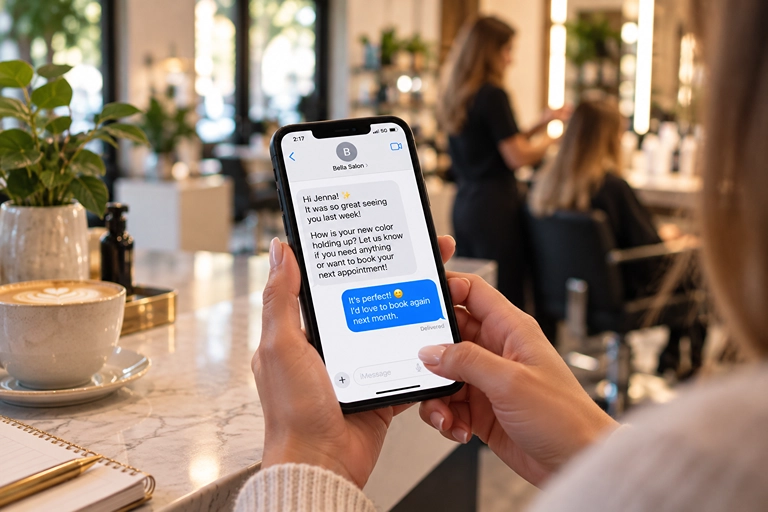
A simple, timely follow-up text can turn one-time buyers into familiar faces.
If you’re nerdy like me and love thinking in flows, a follow-up can be as simple as:
# Pseudo-logic for a basic follow-up workflow

if customer.made_purchase:
    send_message(
        to=customer.contact,
        channel="sms",
        template="thanks_and_next_steps"
    )

if days_since(customer.last_purchase) == 7:
    send_message(
        to=customer.contact,
        channel="email",
        template="how_is_it_going"
    )
💡 Pro Tip: Don’t overthink the copy. Friendly, specific, and short beats “perfect” every time.
b. The “We Miss You” Campaign: Gently Nudge the Ghosts
Every business has a graveyard of “haven’t seen you in a while” customers. They’re not mad. They’re just gone. A simple reactivation campaign can bring them back from the dead, no Ouija board required.
Salon: “It’s been 8 weeks since your last visit, your hair misses you and so do we. Want the same stylist next week?”
Plumber: “Quick check-in: any issues since our last visit? We can schedule a preventive check before things get… dramatic.”
E‑commerce brand: “We noticed you haven’t ordered in a bit. Here’s 10% off if you reorder this week.”
# Simple "we miss you" logic

QUIET_DAYS = 45

for customer in customers:
    if days_since(customer.last_purchase) >= QUIET_DAYS:
        send_message(
            to=customer.contact,
            channel="sms",
            template="we_miss_you_offer"
        )
c. Turn One Purchase into a Habit: Subscriptions, Memberships, and Recurring Services
If you want calmer cash flow, build in predictability. That means turning “see you sometime” into “see you every month.” Subscriptions and memberships aren’t just for Netflix and SaaS compani they work beautifully in the offline world too.
Coffee shop: Monthly drink pass or “10 drinks per month” subscription.
Gym: Tiered memberships with perks like guest passes or quarterly check-ins.
Plumber: Annual maintenance plan: one inspection + priority emergency support.
Recurring revenue is the adult version of finding money in your jeans. Except you know it’s coming, so you can plan inventory, staffing, and growth like a sane person.
d. Ask for Feedback (And Then Actually Do Something With It)
Want a secret loyalty hack? Ask people what they think, then visibly fix things. Most customers don’t expect perfection. They expect you to care, listen, and improve. That’s it. Low bar. Great opportunity.
Send a 2–3 question survey after a visit or purchase.
Ask one open-ended question: “What’s one thing we could do better next time?”
Reply when someone gives great feedback: “We changed this because of you.”
# Pseudo-logic for feedback requests

for customer in customers:
    if days_since(customer.last_purchase) == 2:
        send_message(
            to=customer.contact,
            channel="email",
            template="feedback_survey_link"
        )
💡 Pro Tip: Turn repeated feedback into a “we heard you” update in your emails or socials. Customers love seeing their fingerprints on your improvements.
e. Make Customers Feel Like VIPs (Without a Super Bowl Budget)
You don’t need champagne fountains and velvet ropes. You just need to make people feel like you remember them. Personalization doesn’t have to be creepy or complicated, it just has to be real.
Coffee shop: “Hey Maria, your usual?” is free loyalty magic.
Gym: “You’ve hit 10 visits this month, that’s more consistent than 90% of members.”
Law firm: Send a short annual check-in: “Any changes in your business we should know about?”
The human brain is wired to love being seen. The more your customers feel known, the less they’ll price-shop you against strangers on the internet.
5. How Cosmopro Makes All of This Feel Almost Unfairly Easy
All of this sounds great — follow-ups, “we miss you” campaigns, memberships, feedback, VIP treatment, but if you’re already juggling staff, inventory, taxes, and your sanity, you’re probably thinking, “Cool, when exactly am I supposed to do all this?”

The right platform turns retention from a chore into a quiet, automated engine.
That’s where technology earns its keep. At Formosi, we build professional websites and help businesses run everything through Cosmopro — our all-in-one business management platform. Think: one place to manage your leads, customers, follow-ups, campaigns, and pipelines without fifty tabs and three forgotten passwords.
Follow-Up System: Set rules like “after every purchase, send this text” or “after 7 days, send this email.” Cosmopro handles it while you serve customers.
“We Miss You” Campaigns: Automatically tag customers who go quiet for 30, 60, or 90 days and send them a friendly nudge — with or without an offer.
Memberships & Recurring Services: Track plans, renewals, and upcoming payments in a single pipeline so no one slips through the cracks.
Feedback Requests: Trigger review or survey messages after visits and keep all responses tied to the customer profile.
VIP Personalization: See purchase history, visit frequency, and notes in one place so your team can greet customers like regulars — even if it’s their second visit.
# Conceptual workflow you can mirror inside Cosmopro

def on_purchase(customer):
    add_to_pipeline(customer, stage="New Customer")
    send_message(to=customer.contact, channel="sms", template="thank_you")

def schedule_retention_automation(customer):
    if days_since(customer.last_purchase) == 30:
        send_message(to=customer.contact, channel="email", template="we_miss_you")

for customer in active_customers:
    schedule_retention_automation(customer)
You don’t have to write code to use Cosmopro, that’s my day job. But thinking in simple “if this, then that” rules is exactly how we turn your retention strategy into a set-it-once, watch-it-run system. Your job becomes designing the experience; the platform does the reminding, nudging, and tracking.
6. Your One Action Today: Talk to Your Last 10 Customers

Big retention gains start with one simple, deliberate step taken today.
Let’s land this with something painfully simple and wildly effective. No funnels, no fancy dashboards, no buzzwords. Just this:
🎯 Today’s move: Reach out to your last 10 customers. Personally.
Text them: “Hey [Name], just wanted to say thanks again for choosing us. How’s everything going with [what they bought]?”
Email them: “Anything we could have done better? We actually read these.”
Call them if you’re brave: “Just checking in and seeing how we can help next.”
That single action will do more for your cash flow, customer loyalty, and repeat customers than another week obsessing over ad copy. It’s the start of a real business retention strategy — one that works whether you have 5 customers or 5,000 and whether you’re serving lattes, legal advice, or landscaping.
And if you want to turn that one-time burst of effort into a simple, automated system, with follow-ups, “we miss you” campaigns, feedback requests, and VIP treatment baked in, that’s literally what we do all day at Formosi. We’ll help you:
Build a professional website that doesn’t just look good, but actually helps keep customers coming back.
Get your business running smoothly on Cosmopro so your retention workflows fire automatically while you focus on serving people.
If 2026 is the year cash flow finally became your top concern, let’s make it the year customer retention became your unfair advantage. Reach out to your last 10 customers today, then reach out to Formosi, and we’ll help you turn that one step into a system.